Leading Manufacturer of Lithium Battery Chargers and Power Adapters
+86-15361625091

Views: 26 Author: Lilon charger Publish Time: 2026-10-19 Origin: Site


A charger is often a small component in a larger electronic product, but its performance can have a significant impact on product safety.
In 2026, the U.S. Food and Drug Administration (FDA) published a recall record for certain chargers used with the Therabody Theragun G4 PRO massage device. The record states that the charging cradle may overheat while charging the device's removable battery pack, creating a potential fire risk.
According to the FDA, reported issues included overheating, visible smoke, melting, charger burn damage, burning odors, and reports alleging that the product caught fire. The recall was initiated on June 23, 2026, and posted by the FDA on July 31, 2026. The recall remained open as of the FDA record's October 7, 2026 update. The underlying cause was still under investigation by the company. Read the official FDA recall record.
This case highlights an important point for manufacturers and OEM buyers: charger safety involves more than delivering the correct voltage and current.
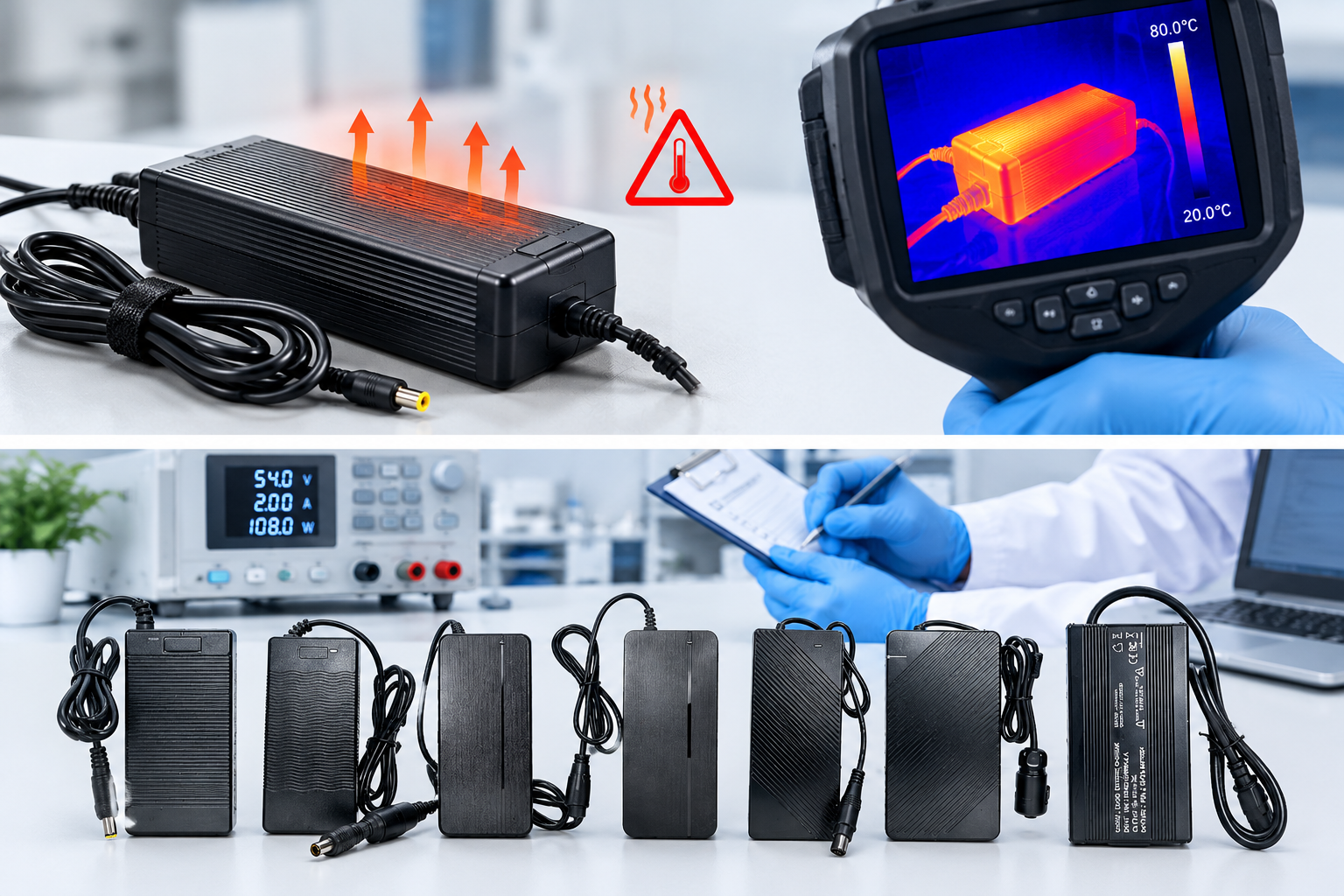
Overheating can have multiple causes. A single recall does not establish which technical factor caused a specific incident, but several areas deserve attention during product development and verification.
The charger's output voltage, current capability, power rating, and charging method must match the requirements of the device and its battery system.
An incorrect or incompatible power source may cause abnormal operating conditions. For rechargeable products, the charger, battery, and charging control circuitry should be evaluated as a system rather than as isolated components.
Power conversion generates heat. Component selection, circuit design, enclosure structure, ventilation, and heat dissipation can all affect operating temperature.
A design should be evaluated under relevant operating conditions, including sustained charging and the expected ambient temperature range. Passing a brief functional test alone does not necessarily demonstrate adequate thermal performance.
A damaged cable, loose connection, unsuitable connector, or poor electrical contact can contribute to abnormal heating.
Manufacturers should verify connector specifications, contact quality, cable ratings, and mechanical durability. Users should stop using a charger if they notice damaged insulation, melting, smoke, or a burning smell.
Protection features can help reduce certain electrical risks, but they do not replace proper design and testing. Depending on the application, the design may require overvoltage, overcurrent, short-circuit, or overtemperature protection.
The appropriate protection strategy depends on the device architecture and applicable safety requirements.
For manufacturers of battery-powered equipment, charger selection should be part of the product development process—not an afterthought.
Check the electrical specifications. Confirm the required output voltage, current, power rating, charging profile, and compatibility with the battery management system.
Evaluate thermal performance. Assess operating temperatures under representative and reasonably foreseeable conditions, following the relevant product and safety requirements.
Verify the complete charging system. Test the charger together with the intended device, battery, connectors, and charging cradle where applicable.
Review safety and EMC documentation. Identify the standards and certification requirements applicable to the target product and market. Requirements vary by application, and documentation for an individual power supply does not automatically establish compliance of the complete end product.
Maintain traceability and change control. Document component changes, production revisions, test results, and supplier information. These records can help manufacturers investigate problems and manage corrective actions.
When sourcing a custom charger or AC/DC power adapter, purchasing and engineering teams should look beyond price and rated output.
Useful questions include:
Can the supplier match the required voltage, current, connector, cable, and charging method?
What safety and EMC documentation is available for the proposed model?
Can the supplier provide samples for compatibility and system-level verification?
How are component substitutions and production changes controlled?
Can the supplier support customized specifications and maintain consistent production quality?
The answers should be evaluated against the actual device requirements. No single specification or certification can guarantee that every charging system will be safe in every operating condition.
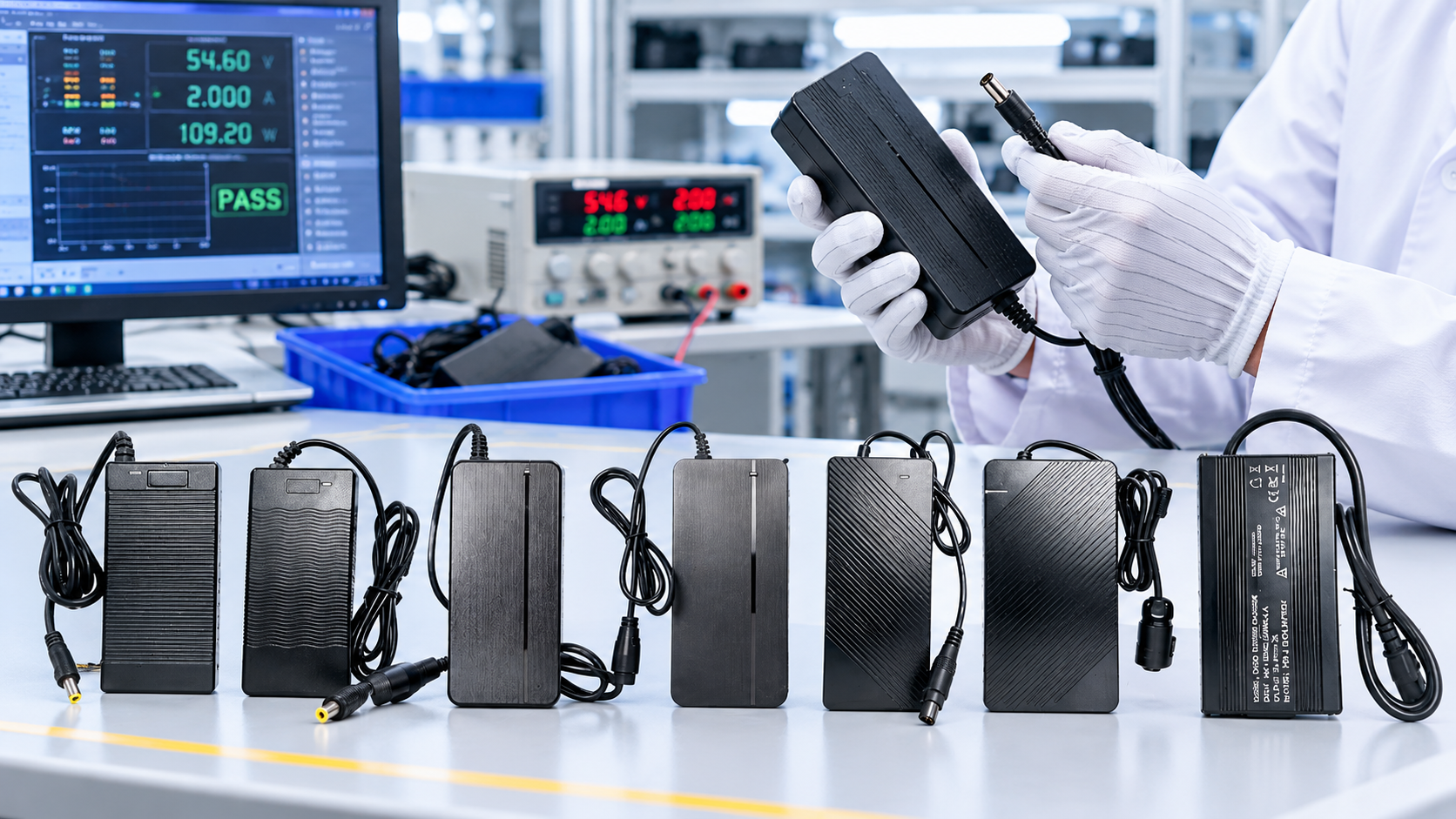
The Theragun G4 PRO charger recall is a practical reminder that a charging system must be designed and verified with safety in mind. Electrical compatibility, thermal management, connector quality, protective functions, and system-level testing all deserve attention.
For businesses developing battery-powered products, working with a charger manufacturer early in the design process can help clarify technical requirements and identify verification needs before mass production.
Looking for a customized charging solution? Our team supports OEM/ODM charger customization, including output specifications, AC/DC connectors, cables, product branding, and packaging. The appropriate design and verification plan should be determined according to your device requirements and target-market standards.
Disclaimer: This article is for general educational purposes and does not replace the official recall notice, product-specific instructions, or applicable safety requirements.


